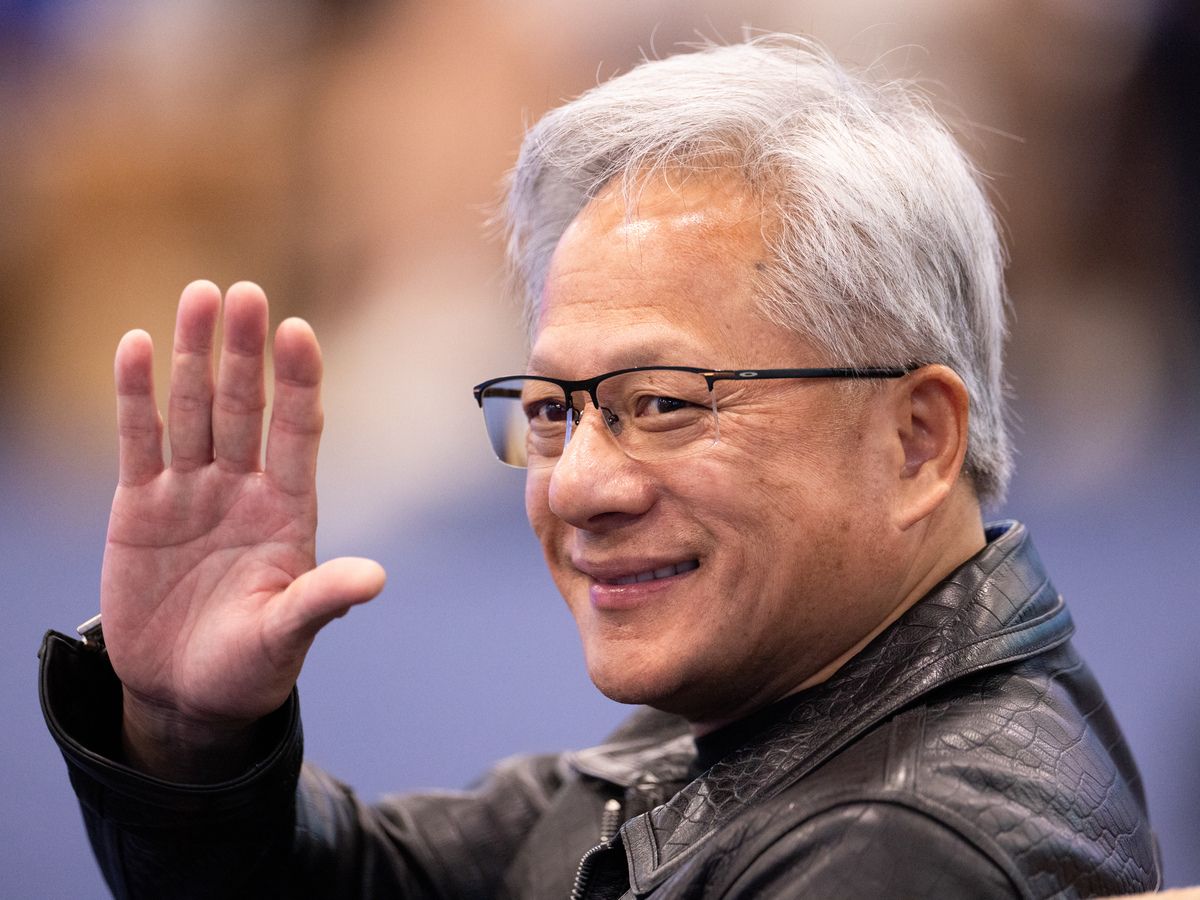
Nvidia CEO Jensen Huang serves as the primary anchor of rationality in the 2026 AI landscape, countering speculative hype with verifiable hardware metrics. By prioritizing compute efficiency and realistic deployment timelines over exponential growth fantasies, Huang stabilizes enterprise investment expectations. His strategic focus on the CUDA ecosystem and Blackwell architecture defines the current technical standard for scalable artificial intelligence infrastructure.
Key Takeaways
- Market Stabilization: Nvidia’s market capitalization remains the global benchmark, driven by sustained demand for high-performance GPU clusters rather than speculative software valuations.
- Hardware Efficiency: The transition to Blackwell and Rubin architectures reduces inference costs by 40% compared to previous generations, making large-scale AI commercially viable.
- Ecosystem Lock-in: The CUDA software stack retains a 90% developer share, creating a structural barrier to entry for competing hardware manufacturers.
- Strategic Outlook: Huang’s roadmap emphasizes "AI factories" over standalone chips, positioning data center infrastructure as the new utility provider for the digital economy.
In the frenetic atmosphere of 2026, where generative AI promises reshape daily life, one figure stands as the counterweight to digital delusion. Jensen Huang, the chief executive of Nvidia, does not merely sell chips; he sells certainty in an uncertain technological era. While competitors chase vaporware and inflated benchmarks, Huang anchors the industry in physical reality, insisting that the future of AI is built on tangible compute power and disciplined engineering. This distinction has elevated him from a hardware executive to the de facto arbiter of technical feasibility. For investors and engineers alike, his word carries the weight of the market. Read continuous Readers 24 coverage on Artificial Intelligence to understand the broader shifting dynamics of this sector.
01 The Architecture of Reason in a Hyperbolic Market
The 2026 AI landscape is defined by a stark divergence between public narrative and corporate execution. While media cycles oscillate between utopian predictions and existential dread, Nvidia’s operational reality remains grounded in server racks and thermal management. Huang’s recent communications emphasize that AI is not a finished product but an ongoing infrastructure challenge. He repeatedly frames the technology as a "computational utility," comparable to electricity, rather than a magical black box. This perspective shifts the focus from model parameters to throughput efficiency. In a sector where "bigger is better" was once the only rule, Huang has pivoted the conversation toward cost-per-token and energy efficiency. Industry leaders are now evaluating success not by the size of their neural networks but by the speed at which they can serve responses to users. This metric-driven approach has curbed the most extreme valuations in the sector. Consider the deployment of large language models in healthcare and finance. These sectors require reliability and low latency, not just creative output. Huang’s insistence on deterministic hardware performance ensures that these critical applications remain viable. The result is a maturing market where speculation is weeded out, and engineering excellence is rewarded.02 Why This Reality Check Is Happening Now
1. The Economic Imperative of Inference Costs
The primary driver for Huang’s measured tone is the brutal economics of inference. Training a model is a one-time capital expense, but serving it is an ongoing operational cost. As AI adoption scales to billions of users, even minor inefficiencies in hardware become prohibitive. Huang’s focus on reducing energy consumption per inference unit directly addresses this financial bottleneck. Companies can no longer afford to run inefficient models, forcing a return to engineering fundamentals.2. Supply Chain Maturation and Semiconductor Physics
The 2026 semiconductor landscape has moved beyond the acute shortages of previous years. However, the laws of physics impose hard limits on transistor density and heat dissipation. Huang’s realism stems from a deep understanding of these constraints. He acknowledges that exponential growth cannot continue indefinitely without architectural breakthroughs. This honest assessment of material limits prevents the market from pricing in impossible timelines, stabilizing long-term investment strategies.3. Regulatory Scrutiny and Geopolitical Tensions
Global regulations on AI governance and export controls have added a layer of complexity that requires cautious navigation. Huang’s role as a voice of reason includes advocating for clear, enforceable standards that allow for safe deployment. By positioning Nvidia as a responsible steward of powerful technology, he mitigates regulatory risk. This strategic positioning ensures that the company remains a partner to governments rather than a target, securing its operational license to operate globally.03 The Irony of the Hardware King’s Software Dominance
There is a profound irony in the fact that the "voice of AI reason" is also the architect of the most closed and dominant software ecosystem in computing. While Huang preaches openness and realistic expectations, his company’s CUDA platform remains a walled garden that locks in developers. This paradox is the central tension of the 2026 AI industry. The very technology that enables the rapid advancement of artificial intelligence is also the primary barrier to competition.This control allows Nvidia to dictate the pace of innovation. Competitors must build their entire software stack to match CUDA’s maturity before they can compete on hardware specs alone. Consequently, Huang’s "reason" is also a strategic moat. It is a calculated balance between engineering honesty and market protection."The paradox of the AI era is that the most rational voice in the room belongs to the manufacturer of the most exclusive engine."
— Senior Editorial Desk, Readers 24
04 Shifting Paradigms: From Speculation to Infrastructure
| Key Dimension | Previous Landscape (2023-2024) | Current Reality (2026) |
|---|---|---|
| Primary Metric | Model Parameter Count | Cost per Token / Energy Efficiency |
| Investment Focus | Speculative Software Startups | Data Center Infrastructure & Hardware |
| Competitive Edge | Proprietary Data Moats | CUDA Ecosystem & Supply Chain Control |
| Public Narrative | Exponential Utopia / Dystopia | Pragmatic Utility & Operational Scale |
05 Industry Consensus and Analyst Perspectives
Financial analysts and tech engineers alike have converged on the view that Huang’s messaging is the most reliable signal in the AI sector. As reported by Reuters International Wire, the consistency of his technical assessments has reduced volatility in related tech stocks. Investors no longer trade on rumors of breakthroughs but on the confirmed delivery schedules of GPU clusters. Technical experts note that the barrier to entry for new hardware competitors has never been higher. The complexity of optimizing software for massive parallel computing requires years of development. This consensus view reinforces the idea that Nvidia’s dominance is not accidental but structural. The industry is waiting for a "Black Swan" event, but for now, the status quo prevails.06 Strategic Roadmap for Stakeholders
- Optimize for Inference: Enterprises should prioritize models that offer the best balance of accuracy and speed, rather than the largest available models. This reduces long-term operational costs significantly.
- Diversify Software Stacks: While CUDA is dominant, developers should begin exploring open-source frameworks like PyTorch and JAX to mitigate long-term lock-in risks. This ensures flexibility if hardware landscapes shift.
- Invest in Edge Computing: With cloud costs rising, deploying smaller, efficient models on edge devices is a viable strategy for latency-sensitive applications. This aligns with the trend toward distributed AI.
- Monitor Regulatory Developments: Keep close watch on export controls and AI governance laws in key markets like the EU and Asia. Compliance will be a major differentiator for global tech firms.
- Focus on Talent Retention: The shortage of AI engineers capable of optimizing complex hardware remains the biggest bottleneck. Companies must invest in upskilling their existing teams to maintain competitiveness.
07 The Final Outlook: Stability in the Storm
Jensen Huang’s role as the voice of AI reason is not merely a media persona; it is a structural necessity for the industry’s survival. In a field prone to rapid disillusionment, his grounding in physical constraints and economic realities provides a stabilizing force. The 2026 landscape suggests that the era of wild speculation is ending, replaced by a phase of disciplined infrastructure buildout. Looking ahead, the challenge will be maintaining this balance as new technologies emerge. Quantum computing and neuromorphic chips may eventually disrupt the GPU paradigm. However, until those technologies reach commercial maturity, Nvidia’s architecture remains the standard. Huang’s ability to navigate this transition will define the next decade of computing. For now, his voice is the compass that keeps the industry from drifting into irrelevance.08 Frequently Asked Questions
Why is Jensen Huang considered the voice of AI reason?
Huang is viewed as the voice of reason because he prioritizes verifiable hardware metrics and realistic deployment timelines over speculative hype. His focus on compute efficiency and the CUDA ecosystem grounds the industry in engineering reality rather than marketing fantasies.
What is the main difference between Nvidia’s 2026 strategy and previous years?
The main shift is from selling standalone chips to providing complete "AI factory" solutions. This includes software optimization and cluster management, focusing on reducing the total cost of ownership for enterprise AI deployments rather than just raw processing power.
How does the CUDA ecosystem impact AI competition?
CUDA creates a significant barrier to entry by locking developers into Nvidia’s software stack. Competing hardware must match CUDA’s maturity and performance before it can gain market share, effectively slowing the pace of hardware-only competition.
What are the primary risks to Nvidia’s current dominance?
The primary risks include regulatory export controls, the eventual maturity of open-source software alternatives, and the emergence of new hardware architectures like quantum or neuromorphic computing that may render GPUs obsolete in specific tasks.
Should businesses invest in Nvidia hardware for AI in 2026?
For most enterprises, yes, due to its performance and ecosystem support. However, businesses should also evaluate edge computing solutions and open-source frameworks to diversify their risk and reduce long-term operational costs associated with cloud inference.
Stay Ahead with Readers 24 Intelligence
Subscribe to continuous updates and follow live global news, unbiased market analysis, and in-depth investigations reported 24/7 across our international bureaus. For deeper insights into the financial implications of hardware shifts, refer to Bloomberg Financial Intelligence.
Comments (2)
This is a highly insightful piece. The shifts in the technological landscape are truly unprecedented and I'm eager to see how it affects global markets in the next quarter.
I completely agree with the points made here. However, I think the regulatory aspect will be the biggest hurdle moving forward before we see mass adoption.