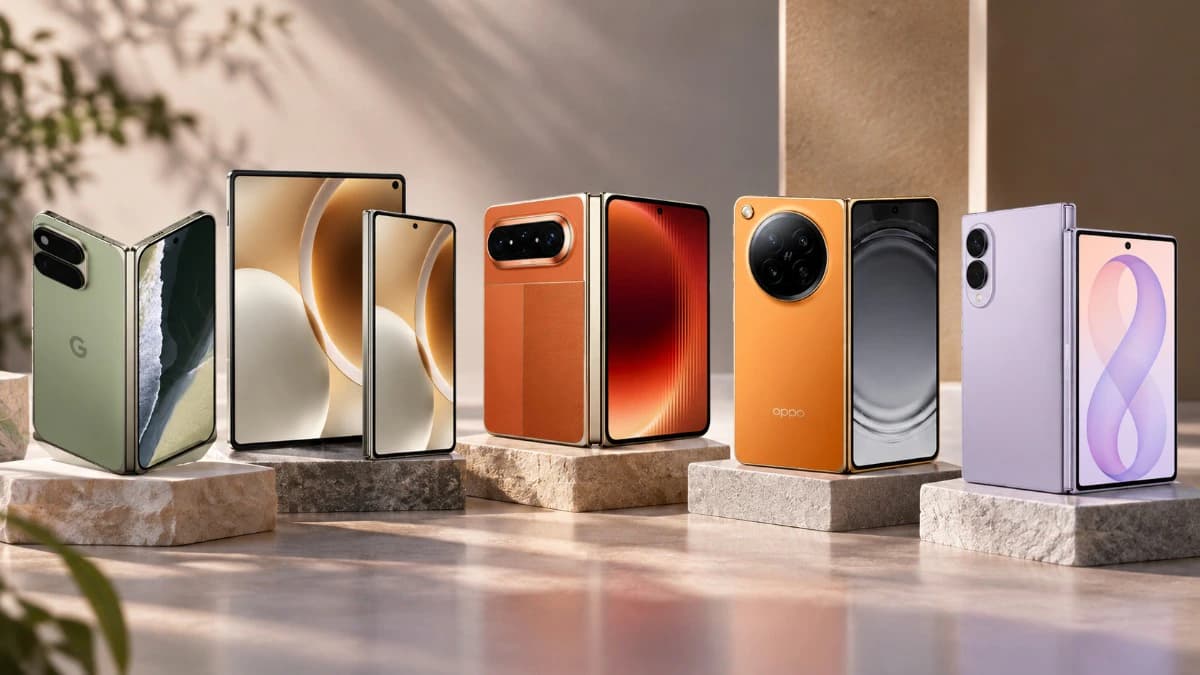
The top alternatives to Apple’s upcoming foldable iPhone include the Samsung Galaxy Z Fold 6, Motorola Razr 2024, and Google Pixel Fold. These Android competitors currently lead the market with larger display sizes, more versatile camera systems, and lower price points. They offer established software ecosystems and proven durability, positioning them as strong tactical choices for consumers prioritizing value and utility over brand exclusivity.
Key Takeaways
- Market Leadership: Samsung and Motorola hold dominant positions in the global foldable segment, offering mature hardware iterations compared to Apple's debut entry.
- Cost Advantage: Android alternatives typically range from $1,000 to $1,700, undercutting the expected premium pricing of the iPhone Duo.
- Hardware Specs: Competitors provide larger outer displays and more robust multi-lens camera arrays, addressing specific utility needs for media consumption and photography.
- Software Maturity: Android foldable optimization is years ahead, offering seamless multitasking and third-party app support that Apple must match upon launch.
The smartphone arena is witnessing a pivotal tactical shift as Apple prepares to enter the foldable division. For years, Android manufacturers have refined the mechanics of flexible OLED panels, creating devices that rival traditional smartphones in daily use. As the "iPhone Duo" approaches its debut, the question is no longer if Apple will compete, but whether its entry can displace the entrenched champions. Read continuous Readers 24 coverage on Apple.
01 The Current State of Play: Analyzing the Foldable Landscape
The foldable market has evolved from a novelty into a viable primary device category. Consumers are no longer buying these phones as secondary companions; they are replacing standard slabs entirely. This shift demands hardware that withstands daily rigors and software that handles complex multitasking without lag. Samsung’s Galaxy Z Fold 6 sets the benchmark for this season. It features a refined hinge mechanism and a wider inner display that improves aspect ratios for video and documents. The device balances weight and durability, making it a serious contender for power users who require a larger canvas for productivity. Meanwhile, Motorola’s Razr 2024 redefines the book-style flip form factor. It offers a significantly larger outer display than its predecessors, transforming the device from a notification checker into a functional mini-smartphone. This tactical improvement allows users to handle calls, messages, and media without unfolding the screen, enhancing usability in one-handed scenarios.02 Why the Competition is Intense Now
The surge in alternative options is driven by three structural factors that have matured the ecosystem.1. Maturation of Flexible OLED Technology
Supply chain improvements have reduced the cost of flexible panels while increasing their durability. Manufacturers like Samsung Display now produce screens that can withstand hundreds of thousands of folds. This technological stability allows for more aggressive design choices, such as seamless book-style designs and larger outer screens, without compromising longevity.2. Software Optimization for Split-Screen Multitasking
Android’s open architecture has allowed developers to optimize apps for dual-screen environments. Unlike early iterations where apps stretched awkwardly, modern OS versions support true split-screen functionality. This makes foldable devices superior for productivity, enabling users to run two apps simultaneously with minimal friction, a key appeal for business professionals.3. Price War and Market Saturation
As the novelty wears off, manufacturers are competing on value. Prices for mid-tier foldables have dropped, while premium models offer more features for similar costs. This competitive pressure forces innovation in cameras, battery life, and processor performance, benefiting the consumer with higher specifications at accessible price points.03 The Hidden Paradox: Durability vs. Design
There is a counterintuitive tension in the foldable market: the most visually striking designs often compromise practical durability. While sleek hinges and thin bezels enhance aesthetics, they can introduce stress points that affect long-term reliability. Apple’s entry faces this same paradox. To match the sleekness of competitors, they may have to sacrifice some ruggedness, or conversely, prioritize durability at the cost of a premium look. The market has shown that consumers value a device that lasts over one that looks perfect on day one."The true test of a foldable is not the unfolding moment, but the unglamorous daily wear that reveals the engineering truth."
— Senior Editorial Desk, Readers 24
04 Comparative Metrics: Apple Entry vs. Top Alternatives
| Key Dimension | Previous Landscape (2023) | Current Reality (2026) |
|---|---|---|
| Outer Display Usability | Small, notification-only screens | Large, functional displays on Motorola Razr and Samsung Flip |
| Camera Versatility | Compromised zoom and low-light performance | Multi-lens arrays matching flagship slab phones |
| Software Multitasking | Basic split-screen with app limitations | Seamless drag-and-drop and app optimization |
| Price Accessibility | Premium pricing with limited value | Competitive pricing with frequent discounts |
05 Industry Perspectives and Analyst Consensus
Analysts from major research firms consistently highlight that the foldable market is transitioning from early adopters to the mainstream. Public sentiment indicates a preference for devices that offer tangible utility over brand prestige. Industry experts note that Apple’s entry will likely stabilize prices and drive innovation, but the Android camp has already built a loyal following. The consensus is that alternatives like the Galaxy Z Fold 6 and Pixel Fold offer a more refined user experience for specific tasks, such as media consumption and photography, due to their mature software ecosystems.06 Strategic Recommendations for Buyers
- Assess Primary Use Case: Determine if you need a large canvas for productivity or a compact device for portability. This dictates whether a book-style or flip-style phone is the right tactical choice.
- Evaluate Software Ecosystem: If you rely on specific third-party apps, check their optimization for foldable screens. Android’s openness often results in better compatibility for niche applications.
- Consider Total Cost of Ownership: Factor in screen replacement costs and battery longevity. Established brands often have better service networks and parts availability.
- Wait for Launch Reviews: For the iPhone Duo, wait for independent durability tests and performance benchmarks. Initial reviews often reveal real-world issues that marketing materials omit.
- Explore Financing Options: High-end foldables are significant investments. Look for carrier trade-in programs and installment plans to mitigate upfront costs.
07 The Final Outlook: A Multi-Polar Market
The arrival of Apple’s first foldable does not spell the end for Android competitors; it signals the beginning of a mature, multi-polar market. Consumers will have more choices than ever, with each brand offering distinct advantages in design, software, and pricing. The "iPhone Duo" will undoubtedly capture significant market share due to brand loyalty and ecosystem integration. However, the established players from Samsung, Motorola, and Google will remain strong contenders for those who prioritize specific features, value, or software flexibility. The foldable race is no longer about novelty; it is about sustained performance and user satisfaction.08 Frequently Asked Questions
What is the best alternative to the iPhone Duo for photography?
The Samsung Galaxy Z Fold 6 is widely regarded as the top choice for photography. It features a multi-lens camera system with advanced computational photography capabilities, offering versatility and image quality that rivals dedicated flagship slab phones, making it ideal for content creators.
Is the Motorola Razr 2024 a good primary phone?
Yes, the Motorola Razr 2024 is suitable as a primary device for many users. Its larger outer display allows for handling calls, messages, and media without unfolding the screen. However, the inner display is smaller than book-style competitors, which may limit productivity for power users.
How does the Google Pixel Fold compare in software experience?
The Google Pixel Fold offers a clean, optimized Android experience with strong integration with Google services. Its software is known for stability and useful AI-driven features. However, it lacks the extensive third-party app optimization seen in Samsung’s ecosystem, which can be a limitation for some users.
Are foldable phones durable enough for daily use?
Modern foldable phones are significantly more durable than earlier models. They are tested to withstand hundreds of thousands of folds. However, the crease remains visible, and the screen is more susceptible to scratches and dust ingress compared to traditional glass-backed phones.
When is the iPhone Duo expected to launch?
Apple’s first foldable phone, often referred to as the iPhone Duo or iPhone Fold, is expected to launch in late 2026. Specific dates have not been announced, but industry leaks suggest a fall release, coinciding with Apple’s typical annual product launch cycle.
Stay Ahead with Readers 24 Intelligence
Subscribe to continuous updates and follow live global news, unbiased market analysis, and in-depth investigations reported 24/7 across our international bureaus.
Verify primary documentation and global coverage metrics ↗ Follow live continuous analysis on Readers 24 Live
Comments (2)
This is a highly insightful piece. The shifts in the technological landscape are truly unprecedented and I'm eager to see how it affects global markets in the next quarter.
I completely agree with the points made here. However, I think the regulatory aspect will be the biggest hurdle moving forward before we see mass adoption.