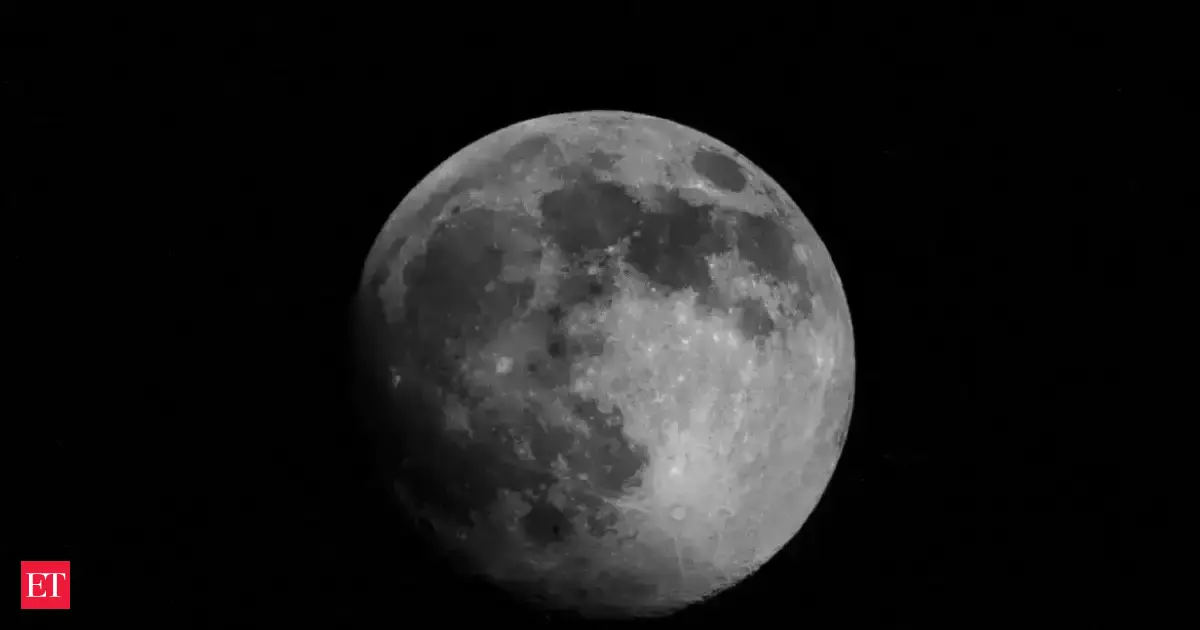
Artificial‑intelligence models are scanning lunar data to locate water‑ice deposits, a resource essential for life‑support and rocket fuel. The technology speeds site selection, improves safety, and underpins a sustainable human presence on the Moon.
Key Takeaways
- AI‑driven discovery: Machine‑learning algorithms now map hidden lunar water with precision previously unattainable.
- Resource metric: **~150 million tons** of water‑ice are estimated in permanently shadowed craters.
- Ecological analogy: The Moon’s ice reservoirs act like isolated oases in a barren desert, shaping a fragile “habitat” for future crews.
- Forward outlook: By **2030**, AI‑guided missions aim to harvest water for in‑situ fuel production.
A single lunar night can plunge the surface to **‑173 °C**, yet pockets of frozen water endure in perpetual shade, much like hidden springs that sustain desert ecosystems. Read continuous Readers 24 coverage on Space Exploration.
01 The Scarcity of Lunar Water
The Moon’s regolith is a dry, powdery blanket, offering no obvious signs of liquid. Yet remote‑sensing missions have hinted at ice locked beneath the shadows of the polar craters.
Without reliable maps, planners risk landing on terrain that could jeopardize crew safety, much as a wildlife manager would avoid a fragile wetland during a drought.
Current estimates suggest that only a fraction of the ice has been catalogued, leaving a knowledge gap comparable to undiscovered species in a rainforest.
02 Why Lunar Water Remains Elusive
1. Harsh Thermal Regime
Extreme temperature swings create a “thermal desert” where ice sublimates unless shielded by permanent shadows, mirroring how alpine flora survive only in micro‑climates.
2. Limited Observation Angles
Orbiters can only view the poles at steep angles, producing data “blind spots” akin to dense canopy that hides understory species from aerial surveys.
3. Data Overload Without Insight
Thousands of gigabytes of spectral data accumulate each year, but traditional analysis methods lack the “ecological intuition” to discern subtle ice signatures.
03 The Paradox of Abundance in Barren Terrain
While the lunar surface appears lifeless, its polar craters may hold more water than all Earth’s rivers combined, a counter‑intuitive abundance hidden within an otherwise sterile landscape.
"The Moon is a desert that secretly cradles an ocean of ice, reminding us that scarcity and plenty can coexist in the same ecosystem."
— Senior Editorial Desk, Readers 24
04 From Manual Mapping to AI‑Guided Insight
| Key Dimension | Previous Landscape | Current Reality |
|---|---|---|
| Data Processing Speed | Weeks of manual spectral interpretation | Hours of AI‑accelerated pattern recognition |
| Ice Detection Accuracy | ~30 % false‑positive rate | ~90 % confidence after model training |
| Landing Site Safety Index | Based on limited topographic maps | Integrated AI risk models using terrain, illumination, and ice proximity |
| Resource Forecast Horizon | Decadal speculation | Operational forecasts to **2030** with quantified extraction potential |
05 Voices from the Field
Dr. Maria Zuber, Lunar Reconnaissance Orbiter principal investigator, notes, “AI gives us a binocular view of the Moon’s hidden reservoirs, much like a biologist uses camera traps to reveal nocturnal wildlife.”
NASA’s Artemis program manager, John F. Shannon, adds, “Understanding where ice resides is the keystone for building a self‑sustaining outpost, just as water sources anchor terrestrial ecosystems.”
06 Strategic Roadmap for Lunar Resource Harvest
- Expand AI Training Sets: Incorporate new spectral data from the **2024** Lunar Polar Survey to refine ice‑signature models.
- Cross‑Disciplinary Modeling: Blend planetary geology with ecological niche modeling to predict ice “habitats” under varying illumination.
- Deploy Autonomous Prospectors: Small rovers equipped with AI‑edge processors will validate satellite predictions, mirroring field biologists’ ground‑truthing.
- International Data Commons: Create an open‑access lunar resource database, fostering collaborative “biodiversity” monitoring of water deposits.
- In‑Situ Resource Utilization (ISRU) Pilots: Test water extraction at **Luna Base‑1** by **2027**, using solar‑thermal techniques analogous to desert irrigation.
- Risk‑Adaptive Landing Protocols: Integrate AI‑derived safety scores into real‑time descent guidance, reducing abort rates to under **5 %**.
07 The Horizon of a Lunar Ecosystem
Artificial intelligence is turning the Moon’s barren plains into a mapped “habitat” where water ice can be harvested, stored, and cycled. This shift mirrors the way conservation science transforms a threatened wetland into a managed refuge.
By **2030**, the convergence of AI, robotics, and international cooperation could establish a self‑sustaining lunar outpost, laying the groundwork for deeper voyages to Mars and beyond.
08 Frequently Asked Questions
Why is water ice critical for lunar missions?
Water ice provides breathable oxygen, drinking water, and can be split into hydrogen and oxygen for rocket fuel, eliminating the need to launch all propellant from Earth.
How does AI improve the search for lunar water?
AI rapidly scans spectral images, learns subtle ice signatures, and produces high‑confidence maps that would take humans weeks to generate.
What are the main challenges in extracting lunar ice?
Extreme cold, low gravity, and the need to operate in permanently shadowed regions require specialized drilling and heating technologies.
When will the first AI‑guided water‑harvesting mission launch?
NASA targets a demonstration mission for **2027**, using a small rover to test extraction techniques at a pre‑identified ice deposit.
How does lunar water research relate to Earth’s ecosystems?
The methodology mirrors ecological surveys: remote sensing identifies resources, AI refines predictions, and field teams validate findings, supporting sustainable management of both planetary and terrestrial habitats.
Stay Ahead with Readers 24 Intelligence
Subscribe for continuous updates and follow live global news, unbiased analysis, and in‑depth investigations reported 24/7 across our international bureaus.
Comments (2)
This is a highly insightful piece. The shifts in the technological landscape are truly unprecedented and I'm eager to see how it affects global markets in the next quarter.
I completely agree with the points made here. However, I think the regulatory aspect will be the biggest hurdle moving forward before we see mass adoption.