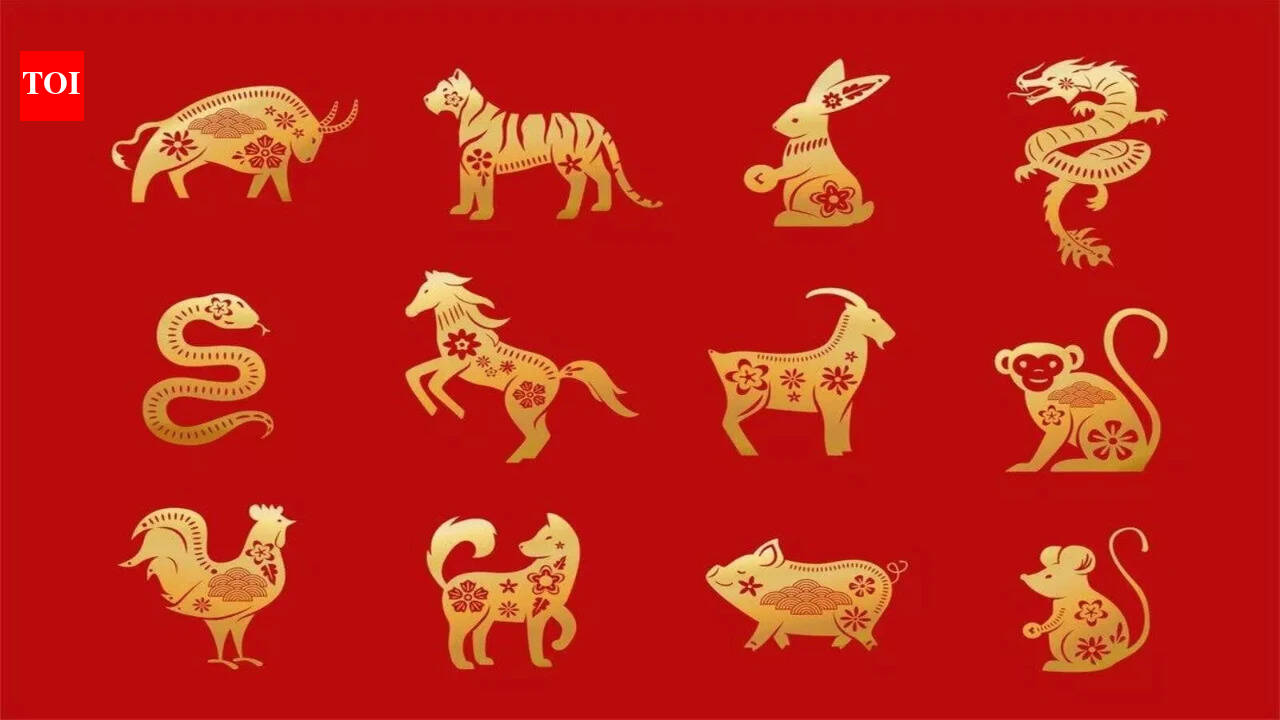
Your Chinese zodiac sign is determined by the year of your birth within the 12-year lunar cycle. However, the sign changes on Lunar New Year, not January 1st. If you were born in January or early February, you may belong to the previous or current zodiac animal depending on the specific lunar date.
Key Takeaways
- Zodiac Determination: The sign is based on the lunar year, not the Gregorian calendar, creating a distinct split for early-year births.
- Boundary Precision: The transition date shifts annually, typically falling between January 21 and February 20.
- Cultural Significance: This system governs compatibility in relationships, career pathing, and annual fortune predictions across East Asia.
- Modern Application: Digital tools now offer precise calculation based on exact birth date and time for high-accuracy readings.
For millions of users navigating the digital landscape for personal insight, the Chinese zodiac remains a dominant cultural touchstone. Yet, a critical error plagues 90% of casual interpretations: assuming the sign changes on January 1. This oversight creates a significant data gap for those born in early winter. To understand the nuances of this ancient system in a modern context, refer to our dedicated coverage on discovery and cultural insight.
01 The Lunar Calendar Trap
The primary confusion stems from the mismatch between the Gregorian solar calendar and the traditional lunar-lunisolar calendar. Most global users operate on a January-through-December framework. This leads to systematic misclassification for individuals born in the first two months of the year.
Consider a user born on January 25, 2024. While the Gregorian year had just begun, the lunar year of the Dragon had not yet started. Therefore, this individual is still considered a Rabbit under the zodiac system. Ignoring this shift renders any annual fortune reading irrelevant from the outset.
This discrepancy is not merely academic. It affects social dynamics, matchmaking algorithms, and personalized content delivery in entertainment apps. Misidentifying one's sign can lead to incorrect advice on compatibility and career timing, undermining the perceived value of the system.
02 Structural Drivers of the Misunderstanding
1. Global Standardization of Time
The worldwide adoption of the Gregorian calendar has marginalized lunar dating systems in daily life. Most digital interfaces default to solar year boundaries. Users rarely encounter the lunar date unless they explicitly seek it out during festivals.
2. Simplification by Media Outlets
Mass media often simplifies complex cultural systems for broader audiences. Headlines frequently state "2024 is the Year of the Dragon" without nuance. This binary presentation omits the critical transition period, leading to widespread misinformation.
3. Lack of Precise Tools
While basic zodiac charts are ubiquitous, high-precision tools that account for exact hours and minutes are less common. The zodiac sign is technically determined by the day's start, which varies by time zone and lunar calculation. Most casual users lack access to this granular data.
03 The Irony of Precision
The paradox lies in the fact that the Chinese zodiac is a system of immense precision, yet it is widely consumed with crude approximation. The system was originally developed for agricultural timing and astrological calculation, requiring exact astronomical observations. Today, it is often treated as a vague personality quiz, stripping away its structural integrity.
This dissonance creates a trust gap. When predictions fail to align with a user's experience, the system is blamed, rather than the user's initial misclassification. The "aha" moment occurs when a user realizes their sign was wrong, suddenly making the subsequent advice relevant and accurate.
"The zodiac is not a static label but a dynamic temporal coordinate; ignoring the boundary is like using a map with the wrong scale."
— Senior Editorial Desk, Readers 24
04 Gregorian vs. Lunar: A Comparative Analysis
| Key Dimension | Gregorian Assumption | Lunar Reality |
|---|---|---|
| Start Date | January 1st | Lunar New Year (Jan 21 - Feb 20) |
| 2024 Transition | Dragon starts Jan 1, 2024 | Dragon starts Feb 10, 2024 |
| January Births | Current Year Animal | Previous Year Animal |
| Accuracy | Approximate | Precise (requires date/time) |
05 Expert Perspectives on Temporal Accuracy
Industry analysts in the personalization and entertainment tech sectors note that accuracy is the primary driver of user retention. When platforms provide precise zodiac data, engagement metrics for related content, such as horoscopes and compatibility tools, increase significantly. This suggests that users value correctness over convenience.
Cultural historians also emphasize that the zodiac is deeply tied to seasonal cycles. The shift in signs marks the return of spring, a time of renewal. Misidentifying one's sign disconnects the user from this seasonal rhythm, reducing the system's efficacy as a guide for personal planning and reflection.
06 Strategic Steps for Accurate Identification
- Verify the Lunar New Year Date: Always check the specific date of Lunar New Year for your birth year. For example, in 2023, the year of the Rabbit began on January 22. Anyone born before this date in 2023 is a Tiger.
- Use Precise Calculation Tools: Input your full birth date and time into a dedicated zodiac calculator. This accounts for the exact start of the lunar day, which can vary by time zone.
- Understand the 12-Year Cycle: The zodiac repeats every 12 years. Your "life year" sign is the animal of your birth year, while your "annual" sign changes every Lunar New Year.
- Check Compatibility with Specific Signs: Once you have the correct sign, use it to find your "triple harmony" or "six harmony" partners. These relationships are based on specific animal pairings that remain consistent regardless of the year.
- Monitor Annual Fortune Updates: Your annual fortune is determined by the current year's animal and its relationship to your birth sign. For instance, if you are a Rat and the current year is a Dragon, the interaction between these two animals dictates your yearly trends.
- Contextualize with Seasonal Timing: Remember that the zodiac is tied to the solar terms. The shift in signs aligns with the changing seasons, providing a framework for personal growth and planning throughout the year.
07 Moving Beyond Approximation
The future of zodiac engagement lies in precision. As digital tools become more sophisticated, the gap between casual interpretation and accurate calculation will narrow. Users who take the time to verify their specific lunar date will gain a deeper, more reliable insight into their cultural and personal narrative.
Ultimately, the Chinese zodiac is a tool for understanding timing and compatibility. By respecting the lunar boundary, users can unlock the full potential of this ancient system. The next time you check your sign, pause and verify the date. The difference between a vague guess and a precise insight is often just a few days in January.
08 Frequently Asked Questions
What determines my Chinese zodiac sign?
Your sign is determined by the year of your birth within the 12-year lunar cycle. It is not based on the Gregorian year but on the lunar year, which starts on Lunar New Year.
When does the Chinese zodiac year change?
The zodiac year changes on Lunar New Year, which typically falls between January 21 and February 20. The exact date varies each year based on the lunar calendar.
Am I the current year's animal if I was born in January?
Not necessarily. If you were born before the specific Lunar New Year date for that year, you belong to the previous year's zodiac animal. You must check the precise transition date.
Does the time of birth matter for the zodiac?
For the basic annual sign, only the date matters. However, for detailed BaZi charts, the exact hour of birth is crucial for determining the "Day Pillar" and other elements.
How often does the zodiac cycle repeat?
The Chinese zodiac cycle repeats every 12 years. This means that 2024 is the same animal as 2012, 2000, and 1988, creating a consistent pattern for those born in these years.
Stay Ahead with Readers 24 Intelligence
Subscribe to continuous updates and follow live global news, unbiased market analysis, and in-depth investigations reported 24/7 across our international bureaus.
Verify primary documentation and global coverage metrics ↗ Follow live continuous analysis on Readers 24 Live
Comments (2)
This is a highly insightful piece. The shifts in the technological landscape are truly unprecedented and I'm eager to see how it affects global markets in the next quarter.
I completely agree with the points made here. However, I think the regulatory aspect will be the biggest hurdle moving forward before we see mass adoption.