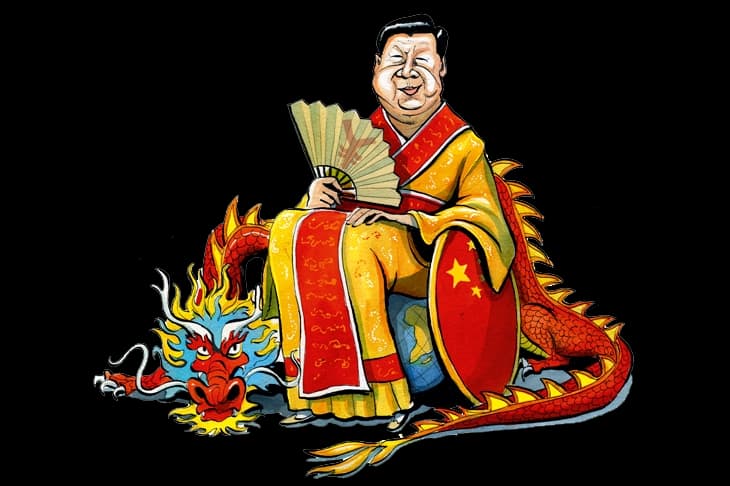
China is leveraging state-directed capital and export subsidies to dominate global supply chains in semiconductors, electric vehicles, and AI infrastructure. By 2026, this strategy threatens Western industrial margins, forcing a structural decoupling that prioritizes geopolitical security over pure market efficiency.
Key Takeaways
- Industrial Policy Shift: Beijing has replaced open-market competition with a "whole-of-nation" approach, subsidizing key tech sectors to ensure global market share dominance.
- Export Volume Surge: Chinese EV exports exceeded 2 million units in recent cycles, flooding European and Southeast Asian markets at price points Western OEMs cannot match.
- Chip Architecture Gap: While lagging in leading-edge lithography, China has achieved parity in mature-node chips and battery chemistry, securing the backbone of global hardware.
- Strategic Decoupling: Western nations are implementing strict export controls and tariffs, signaling a permanent bifurcation of the global technology ecosystem.
The global economic landscape is no longer a single, fluid marketplace but a fractured arena where efficiency has been sacrificed for security. Beijing is executing a precise, multi-decade campaign to own the critical inputs of the modern digital economy. From the silicon in your smartphone to the lithium in your electric vehicle, the center of gravity for global technology is shifting eastward. This is not merely a trade dispute; it is a fundamental restructuring of how the world produces and distributes value. To understand the magnitude of this shift, one must look beyond headlines to the underlying industrial architecture. Read continuous Readers 24 coverage on Global Economy to track the unfolding narrative in real-time.
01 The Mechanics of Market Dominance: What Is Happening Now?
The core issue is not just volume, but the systematic elimination of Western competitors through predatory pricing and state-backed scale. Chinese manufacturers are operating at a loss in several key sectors to crush rivals, a strategy sustainable only because of massive government subsidies. This creates a "death spiral" for smaller Western firms that cannot match the cost structure of their Asian counterparts. Consider the electric vehicle sector. Chinese OEMs are producing battery electric vehicles at a cost that is **30% to 50% lower** than their European and American equivalents. This price differential is not due to superior engineering alone, but to a vertically integrated supply chain that includes mining, cell production, and assembly. The result is a market where price is the only differentiator, a metric in which Western incumbents are currently losing. In the semiconductor industry, the dynamic is different but equally potent. While China cannot yet manufacture the most advanced AI chips, it dominates the production of "mature-node" chips used in cars, appliances, and industrial equipment. By controlling the supply of these essential components, Beijing holds leverage over the broader global manufacturing base.02 Why Is This Happening Now? Three Structural Drivers
1. The "Whole-of-Nation" Industrial Policy
Beijing has adopted a directive known as the "New Plan Made in China," which explicitly targets self-sufficiency in high-tech sectors. The government provides low-interest loans, tax breaks, and land subsidies to key companies. This state capitalism allows firms to invest in long-term R&D without the quarterly pressure to show profits, a luxury Western public companies do not have.2. Supply Chain Vertical Integration
China controls approximately **70% of global battery refining capacity** and a similar share of solar panel manufacturing. This vertical integration means Chinese companies capture value at every stage of the production process. Western firms, which often rely on third-party suppliers, face higher costs and greater supply chain risks. This structural advantage is difficult to replicate quickly in other regions.3. Demographic and Educational Capital
China produces more STEM graduates annually than the rest of the world combined. This massive talent pool drives innovation in software, AI, and hardware design. Furthermore, the domestic market size provides a testing ground for new technologies. Companies can iterate and refine products in one of the world's largest consumer markets before exporting them globally.03 The Hidden Paradox: Efficiency vs. Security
The central irony of this economic warfare is that Western consumers are currently benefiting from Chinese dominance. Cheap electronics, affordable EVs, and efficient solar power have lowered the cost of living in the West. However, this convenience comes at the price of strategic vulnerability. By relying on Chinese supply chains, Western nations have ceded control over critical technologies to a geopolitical adversary. The paradox is that the very efficiency that made the global economy work is now being weaponized. When a single country controls the supply of a critical component, it holds a form of economic leverage that transcends traditional trade metrics. This creates a dilemma for Western policymakers: protect national security by raising costs for consumers, or maintain low prices at the risk of strategic dependency."We are witnessing the end of the post-Cold War economic consensus, where efficiency was king. Now, resilience is the new currency, and it is expensive."
— Senior Editorial Desk, Readers 24
04 Comparison Matrix: The Shift in Global Tech Economics
| Key Dimension | Previous Landscape (2015-2020) | Current Reality (2026) |
|---|---|---|
| Primary Driver | Cost minimization and global efficiency | National security and supply chain resilience |
| Chinese EV Market Share | Minimal presence in Western markets | Leading in exports with aggressive pricing |
| Chip Supply Chain | Distributed across Asia and the West | China controls mature-node production; West leads in leading-edge |
| Trade Policy | Free trade and multilateral agreements | Section 301 tariffs and export controls |
05 Industry Perspectives and Analyst Consensus
Industry leaders acknowledge that the era of seamless global integration is over. Many Western executives describe a "two-speed" world where technology ecosystems are diverging. Analysts at major investment banks have revised their forecasts, projecting that Western firms will need to increase R&D spending by **20%** just to maintain competitiveness in AI and semiconductors. There is a growing consensus that "de-risking" is not enough. Terms like "decoupling" or "friend-shoring" have become standard corporate vocabulary. Companies are now forced to maintain dual supply chains, one for the Chinese market and one for the West, significantly increasing operational complexity and capital expenditure.06 Strategic Roadmap: How to Navigate the New Landscape
- Diversify Supplier Bases: Businesses must move away from single-source dependencies. Establishing secondary suppliers in Southeast Asia or Latin America can mitigate geopolitical risk.
- Invest in Resilient Infrastructure: Prioritize local manufacturing or nearshoring for critical components. This reduces latency and exposure to cross-border trade disruptions.
- Monitor Export Control Regulations: Staying compliant with evolving US and EU export laws is critical. Non-compliance can result in severe penalties and market exclusion.
- Leverage AI for Supply Chain Visibility: Use predictive analytics to anticipate disruptions. Real-time data on shipping lanes and component availability is essential for proactive management.
- Re-evaluate Procurement Strategies: Shift from "just-in-time" to "just-in-case" inventory models for critical items. Holding more stock is a necessary buffer in a volatile environment.
07 The Verdict: A Bifurcated Future
The attempt by China to corner the global economy is not a temporary blip but a structural transformation. By 2026, the world will likely operate with two distinct technological spheres: one centered in the West, focused on innovation and privacy, and one centered in the East, focused on scale and efficiency. The cost of this bifurcation will be higher prices for consumers and slower global innovation. However, this shift also presents opportunities for Western nations to reindustrialize and regain technological sovereignty. The challenge is whether Western political systems can sustain the long-term investment required to compete with state-directed capitalism. The next decade will be defined by this contest, with the outcome shaping the global economic order for generations.08 Frequently Asked Questions
Is China trying to corner the global economy?
Yes, through state subsidies and export dominance in sectors like EVs and batteries. The goal is to secure long-term geopolitical leverage by controlling critical supply chains.
How does this affect Western consumers?
Short-term, consumers benefit from lower prices. Long-term, they face higher costs due to tariffs and reduced competition as Western firms struggle to match Chinese production efficiency.
What is the impact on the semiconductor industry?
China dominates mature-node chips, which are essential for cars and appliances. Western firms lead in leading-edge AI chips but face supply chain risks from Chinese dependencies.
Can Western companies compete with Chinese subsidies?
It is challenging. Western firms are responding with government incentives like the CHIPS Act, but matching the scale of Chinese state support requires sustained political and financial commitment.
What is "de-risking" in global trade?
De-risking involves reducing dependency on a single country for critical goods. It is a strategic approach to mitigate geopolitical risks without fully severing trade ties.
Stay Ahead with Readers 24 Intelligence
Subscribe to continuous updates and follow live global news, unbiased market analysis, and in-depth investigations reported 24/7 across our international bureaus.
Verify primary documentation and global coverage metrics ↗ | Follow live continuous analysis on Readers 24 Live
Comments (2)
This is a highly insightful piece. The shifts in the technological landscape are truly unprecedented and I'm eager to see how it affects global markets in the next quarter.
I completely agree with the points made here. However, I think the regulatory aspect will be the biggest hurdle moving forward before we see mass adoption.