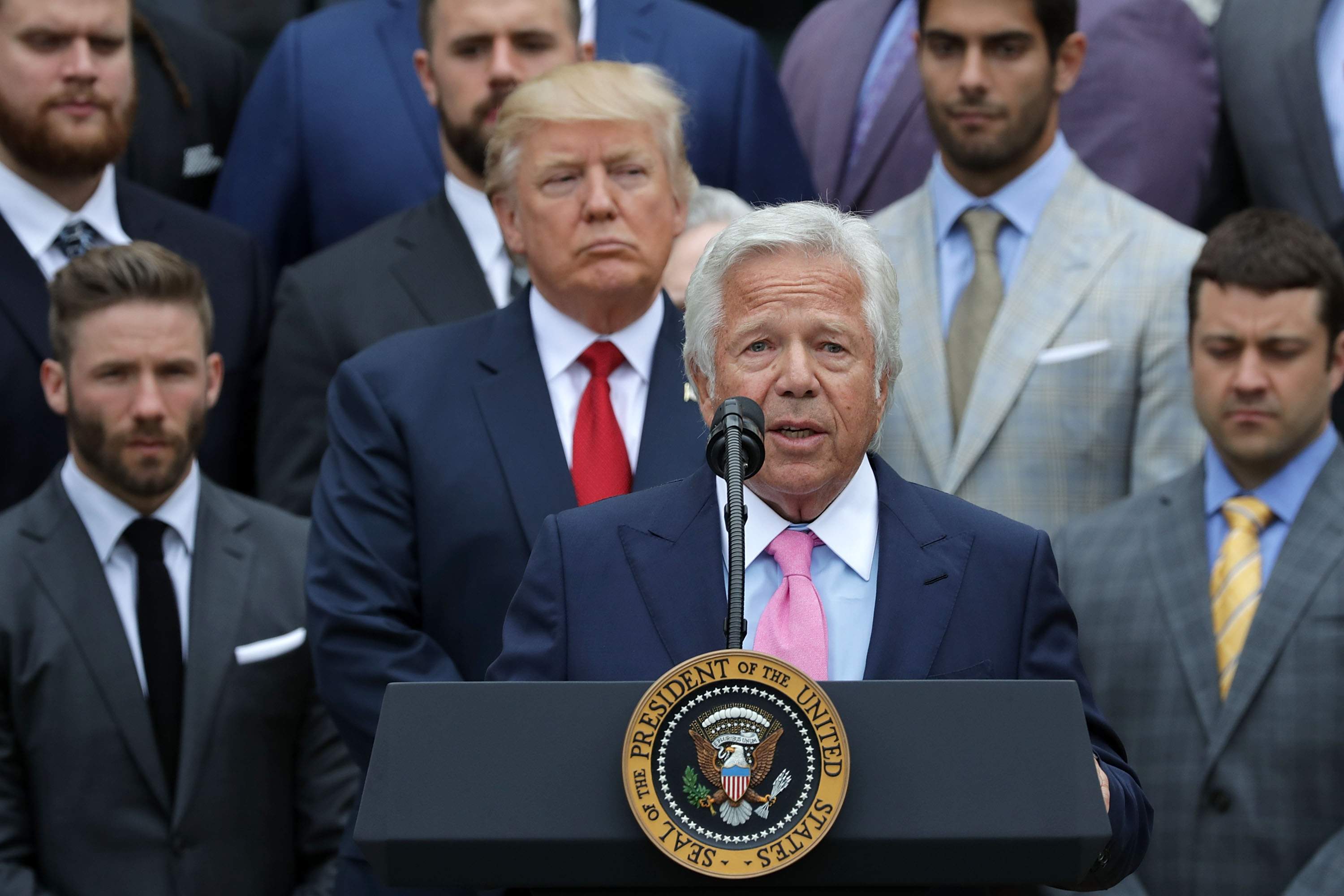
Reportedly, Robert Kraft, the billionaire owner of the New England Patriots, is assisting President Donald Trump in his strategic pivot to rebrand and control the John F. Kennedy Center for the Performing Arts. This development signals a significant consolidation of private capital into federal cultural institutions, aiming to reshape the center's identity and governance structure.
Key Takeaways
- Strategic Alliance: Robert Kraft is reportedly collaborating with the White House to overhaul the Kennedy Center's operational framework and public persona.
- Institutional Shift: The Kennedy Center is transitioning from a federally mandated cultural showcase to a venue aligned with current administration priorities.
- Political Leverage: This move utilizes private business acumen to bypass traditional legislative hurdles regarding federal cultural funding and oversight.
- Future Implications: The partnership sets a precedent for how private entities may influence federal institutions, potentially altering the landscape of American civic engagement.
The intersection of sports capital and federal cultural policy has never been more volatile. In a development that has sent ripples through Washington’s diplomatic and legislative corridors, Robert Kraft is reportedly positioning himself as a key architect in President Donald Trump's campaign to redefine the Kennedy Center. This is not merely a renovation project; it is a fundamental restructuring of how the United States presents its cultural identity on the global stage. For Readers 24 coverage on Trump, this represents a critical juncture where private influence meets public mandate.
01 The Erosion of Institutional Neutrality in Federal Culture
The Kennedy Center has historically served as a neutral ground for American artistic expression. However, the current trajectory suggests a shift toward ideological alignment. This change raises questions about the integrity of federal institutions that are meant to serve all citizens, regardless of political affiliation.
Recent administrative actions have stripped away layers of bureaucratic independence. The center, once a symbol of bipartisan cultural diplomacy, is now under scrutiny for its programming choices. Critics argue that the infusion of specific political interests threatens the diversity of voices within the institution.
For example, recent curatorial decisions have sparked debate among the arts community. Furthermore, the center's role in hosting state dinners and international delegations is being re-evaluated. These shifts indicate a move away from traditional diplomatic protocols toward a more personalized brand of statecraft.
02 Structural Drivers Behind the Kraft-Trump Collaboration
Understanding why this partnership is forming requires looking at three distinct structural factors. These drivers explain the rapid acceleration of this agenda in the early stages of the administration.
1. The Demand for Rapid Institutional Rebranding
The White House seeks to align federal assets with its broader political narrative. The Kennedy Center, with its prime location and global prestige, is a high-value target. By leveraging a private partner like Kraft, the administration can bypass slow legislative processes. This allows for immediate changes in branding, marketing, and operational focus.
2. Private Capital as a Policy Tool
Historically, federal cultural funding has been subject to annual congressional battles. By bringing in a billionaire investor, the administration reduces its reliance on unstable public appropriations. This creates a more stable, albeit privately influenced, funding model. It shifts the center’s accountability from the public to its private stakeholders.
3. Consolidation of Elite Networks
The collaboration reflects a broader trend of merging business elites with political power. Kraft’s influence in sports and media provides a unique conduit for shaping public perception. This network effect allows for the rapid dissemination of the center’s new identity through established commercial channels.
03 The Irony of Privatizing a Public Trust
The core paradox here is that the Kennedy Center is being used to demonstrate American strength while being stripped of its independence. The administration argues that this partnership will modernize the institution and attract new audiences. However, critics point out that this modernization is contingent on ideological compliance.
This creates a scenario where the center’s value is tied to its political utility rather than its artistic merit. The result is a cultural institution that may serve the current administration well but risks losing its long-term global credibility.
"When private capital dictates the soul of a public institution, the concept of civic neutrality ceases to exist, replaced by a transactional relationship of political utility."
— Senior Editorial Desk, Readers 24
04 Comparative Analysis: Past and Present Governance Models
The following table illustrates the significant shifts in the Kennedy Center’s operational and strategic landscape. This comparison highlights the depth of the changes currently underway.
| Key Dimension | Previous Landscape | Current Reality |
|---|---|---|
| Funding Source | Primarily federal appropriations with limited private grants | Increasing reliance on private capital and administrative reallocation |
| Curatorial Control | Independent board with bipartisan oversight | Direct alignment with White House strategic priorities |
| Global Perception | Viewed as a neutral cultural ambassador | Increasingly seen as a political extension of the executive branch |
| Stakeholder Influence | Arts community and civic leaders | Business elites and political insiders |
05 Perspectives from Policy Analysts and Industry Leaders
Policy experts have noted that this move mirrors a broader trend in governance where private entities fill the vacuum left by retreating public institutions. According to analyses from major think tanks, the involvement of figures like Kraft signals a new era of "corporate statecraft." This approach prioritizes efficiency and brand control over traditional democratic checks and balances.
Industry leaders in the arts sector have expressed concern over the precedents set by this partnership. They argue that if the Kennedy Center can be reshaped by a single political administration with the help of a private billionaire, other federal institutions are vulnerable to similar pressures. This sentiment is widespread among diplomatic and cultural observers who track soft power initiatives.
06 Strategic Indicators and Scenarios to Monitor
For policymakers, diplomats, and observers, several key indicators will determine the long-term impact of this development. Monitoring these areas will provide clarity on the direction of American cultural policy.
- Legislative Response: Watch for congressional hearings or bills aimed at reasserting federal oversight over the Kennedy Center. Any legislative pushback will signal a resistance to this privatization model.
- Board Composition Changes: Monitor the appointment of new board members. A shift toward individuals with close ties to the administration or Kraft’s business network will confirm the depth of the influence.
- Programming Shifts: Track changes in the types of performances and events hosted. A noticeable shift toward politically aligned content or the exclusion of certain artists will be a clear indicator of ideological control.
- International Reactions: Assess how foreign governments and diplomatic corps react to the center’s new direction. Any condemnation or distancing by international partners could signal a loss of soft power.
- Financial Transparency: Keep an eye on reports regarding the flow of private funds into the institution. Lack of transparency could raise legal and ethical questions about the use of federal assets.
07 The Future of American Cultural Diplomacy
The partnership between Robert Kraft and the Trump administration marks a pivotal moment in the history of American cultural institutions. It challenges the long-standing assumption that federal cultural bodies would remain insulated from direct political and commercial influence. The outcome of this experiment will have far-reaching implications for the role of art and culture in American foreign policy.
As the Kennedy Center undergoes this transformation, the world will be watching. The success or failure of this model will determine whether the United States can maintain its status as a leader in cultural diplomacy. For now, the signs suggest a more transactional and politically driven approach to one of the nation’s most prestigious cultural assets.
08 Frequently Asked Questions
Is Robert Kraft officially part of the Kennedy Center board?
While specific board appointments are subject to official confirmation, reports indicate he is acting as a strategic advisor. His role involves assisting with rebranding and operational restructuring efforts aligned with administration goals.
Why is the Trump administration targeting the Kennedy Center?
The administration views the center as a key tool for shaping public perception and projecting national strength. Rebranding it allows for greater control over the narrative presented to domestic and international audiences.
How does private funding affect federal institutions?
Private funding can reduce reliance on congressional appropriations but may introduce conflicts of interest. It can lead to a shift in priorities from public service to the interests of private stakeholders.
What is the potential impact on American soft power?
If the center is perceived as politically biased, its effectiveness as a cultural ambassador may diminish. This could weaken the United States' ability to build relationships through cultural exchange.
Are there legal limits to this kind of partnership?
Legal frameworks vary, but generally, federal institutions must operate within the bounds of public trust and transparency. Any actions that undermine these principles could face legal challenges or legislative review.
Stay Ahead with Readers 24 Intelligence
Subscribe to continuous updates and follow live global news, unbiased market analysis, and in-depth investigations reported 24/7 across our international bureaus.
Verify primary documentation and global coverage metrics ↗ Follow live continuous analysis on Readers 24 Live
Comments (2)
This is a highly insightful piece. The shifts in the technological landscape are truly unprecedented and I'm eager to see how it affects global markets in the next quarter.
I completely agree with the points made here. However, I think the regulatory aspect will be the biggest hurdle moving forward before we see mass adoption.