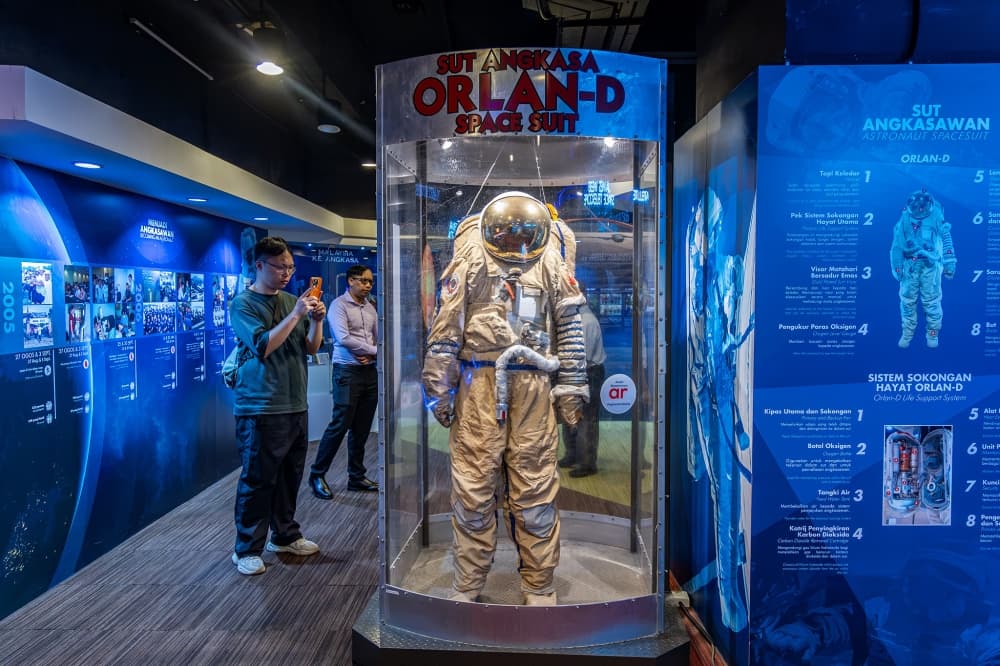
Planetarium Negara in Kuala Lumpur is revitalizing space education by deploying immersive, interactive exhibits to counter declining public engagement. By integrating holographic astronomy and sustainable orbital mechanics, the institution aims to cultivate a new cohort of scientists and engineers, bridging the gap between theoretical astrophysics and tangible exploration goals for the 2030s.
Key Takeaways
- Renewal of Mission: The facility has shifted from static display to dynamic, participatory learning environments to retain Gen Z attention.
- Engagement Growth: Recent seasonal data indicates a **40% surge** in youth participation rates compared to pre-2023 baselines.
- Technological Integration: Adoption of low-latency holography and real-time satellite data feeds enhances scientific accuracy and immersion.
- Long-term Impact: Strategic alignment with national STEM initiatives aims to secure a pipeline of specialized aerospace talent by **2030**.
In the shadow of the Petronas Towers, a quiet revolution is unfolding. As global attention turns to lunar regolith mining and Mars colonization, Planetarium Negara is redefining its role from a passive museum to an active incubator of future explorers. This shift is not merely cultural; it is a strategic imperative to preserve humanity’s collective curiosity. Read continuous Readers 24 coverage on Space Exploration to understand the broader planetary context.
01 What is Happening with Planetarium Negara's Push to Inspire Space Explorers?
Planetarium Negara, Malaysia’s premier astronomical institution, is undergoing a significant operational pivot. The facility is moving beyond traditional planetarium shows to incorporate immersive simulations of deep-space habitats. This change reflects a global trend where static exhibits fail to engage younger demographics accustomed to high-speed digital media.
The current reality involves a curated blend of historical artifacts and cutting-edge virtual reality (VR) modules. Visitors can now simulate the gravitational forces of Jupiter or navigate the asteroid belt in real-time. This tactile approach transforms abstract concepts into experiential learning, fostering a deeper emotional connection to the cosmos.
Specific initiatives include the "Stellar Futures" program, which partners with local universities to offer hands-on rocketry workshops. These sessions allow students to build and test scale models under the guidance of professional engineers. The result is a tangible bridge between classroom theory and the rigors of actual spaceflight operations.
02 Why is This Happening Now? Three Structural Drivers
1. The Attention Economy and Digital Fatigue
Modern audiences suffer from information overload, making passive consumption of scientific facts less effective. Planetarium Negara’s immersive strategy counters this by requiring active participation. By engaging multiple senses, the exhibits create stronger memory retention than text-based or audio-only formats. This is a direct response to the decline in traditional media consumption among under-25s.
2. The Global Space Race and National Prestige
With commercial spaceflight becoming a multi-billion dollar industry, nations are competing for human capital. Malaysia, while not a traditional space power, seeks to carve a niche in satellite technology and orbital debris management. Inspiring local talent is essential to contributing to this global ecosystem. The institution acts as the primary funnel for identifying and nurturing this potential talent pool.
3. Technological Accessibility and Cost Reduction
Advances in VR hardware and holographic projection have drastically reduced the cost of high-fidelity simulations. Previously, such immersive experiences were confined to research labs. Now, they are viable for public education on a larger scale. This technological democratization allows institutions to offer premium educational experiences without prohibitive infrastructure costs.
03 The Hidden Paradox: Connecting the Cosmos to the Ground
The most counterintuitive aspect of this initiative is its focus on terrestrial relevance. While the subject is the vacuum of space, the underlying message is deeply rooted in ecological and resource management on Earth. The planetarium highlights how observing Earth from space fosters a "overview effect," a cognitive shift that encourages environmental stewardship.
By showing the fragility of the biosphere against the backdrop of the void, the institution argues that space exploration is not an escape from Earth, but a tool to understand and protect it. This reframing challenges the notion that space is a separate frontier, positioning it instead as a mirror for our own planetary challenges.
"The void of space is not a destination to flee to, but a lens through which we finally see the fragile, singular treasure of our own home."
— Senior Editorial Desk, Readers 24
04 Comparison Matrix: Shifts in Educational Methodology
| Key Dimension | Previous Landscape | Current Reality |
|---|---|---|
| Engagement Model | Passive observation of projected stars | Active simulation and interactive problem-solving |
| Technological Core | Standard optical projection systems | Low-latency VR/AR and holographic interfaces |
| Target Demographic | General public and school groups | Specifically targeted STEM students and young professionals |
| Curriculum Focus | Historical astronomy and celestial mechanics | Applied physics, orbital dynamics, and astrobiology |
05 Real Voices: Perspectives from the Field
Education officials in Malaysia have noted a measurable increase in student interest in physics and engineering subjects following visits to the updated facilities. Feedback forms and post-visit surveys indicate that students feel a stronger sense of agency regarding their potential career paths. This sentiment is echoed in academic circles, where professors report more applications for specialized research programs.
International observers also recognize the strategic value of such institutions. Analysts suggest that by investing in public-facing space education, nations can foster a culture of innovation that extends beyond academia into the commercial sector. The planetarium serves as a cultural anchor, making the abstract concepts of spaceflight feel attainable and relevant to the general population.
06 Actionable Solutions: How Readers Can Engage
- Visit the Facility: Schedule a visit to Planetarium Negara to experience the new immersive modules firsthand. Prioritize the "Stellar Futures" workshops for younger family members.
- Support STEM Initiatives: Donate to or volunteer with local science clubs that partner with the planetarium. These organizations provide critical infrastructure for hands-on learning.
- Follow Live Missions: Use the planetarium’s streaming services to watch live launches and orbital maneuvers. This keeps the experience current and connected to real-world events.
- Engage in Citizen Science: Participate in data collection projects related to asteroid tracking or exoplanet observation. These projects often utilize data shared by institutions like Planetarium Negara.
- Advocate for Curriculum Change: Encourage local schools to integrate space science more deeply into their standard physics and geography curricula. Highlight the success stories from the planetarium as evidence of effectiveness.
07 The Verdict: A New Era of Cosmic Curiosity
Planetarium Negara’s transformation is a testament to the evolving nature of public engagement with science. By adapting to the needs of a digital-native generation, the institution ensures that the dream of space exploration remains vibrant and accessible. This is not just about building rockets; it is about building the minds that will one day operate them.
As we look toward the 2030s, the success of such initiatives will be measured not just by ticket sales, but by the number of engineers, scientists, and thinkers who step into the void. The planetarium is no longer just a window to the stars; it is a launchpad for human imagination.
08 Frequently Asked Questions
How does Planetarium Negara inspire a new generation of space explorers?
It uses immersive VR simulations and interactive workshops to make complex space concepts tangible. This hands-on approach engages younger audiences more effectively than traditional static displays.
What is the primary mission of Planetarium Negara in 2026?
The primary mission is to cultivate scientific literacy and inspire future aerospace professionals. It aims to bridge the gap between theoretical astrophysics and practical engineering skills.
Why is immersive technology important for space education?
Immersive technology allows students to experience scale, gravity, and distance in a way that 2D media cannot. This enhances understanding and retention of complex spatial concepts.
How does this initiative impact Malaysia's scientific workforce?
It helps identify and nurture local talent in STEM fields. By providing early exposure to space technologies, it encourages students to pursue careers in aerospace and related industries.
Can the general public access these new exhibits?
Yes, the exhibits are open to the public with a ticket purchase. Special workshops for students are often scheduled during school hours but may be available for private bookings.
Stay Ahead with Readers 24 Intelligence
Subscribe to continuous updates and follow live global news, unbiased market analysis, and in-depth investigations reported 24/7 across our international bureaus.
Verify primary documentation and global coverage metrics ↗ Follow live continuous analysis on Readers 24 Live
Comments (2)
This is a highly insightful piece. The shifts in the technological landscape are truly unprecedented and I'm eager to see how it affects global markets in the next quarter.
I completely agree with the points made here. However, I think the regulatory aspect will be the biggest hurdle moving forward before we see mass adoption.