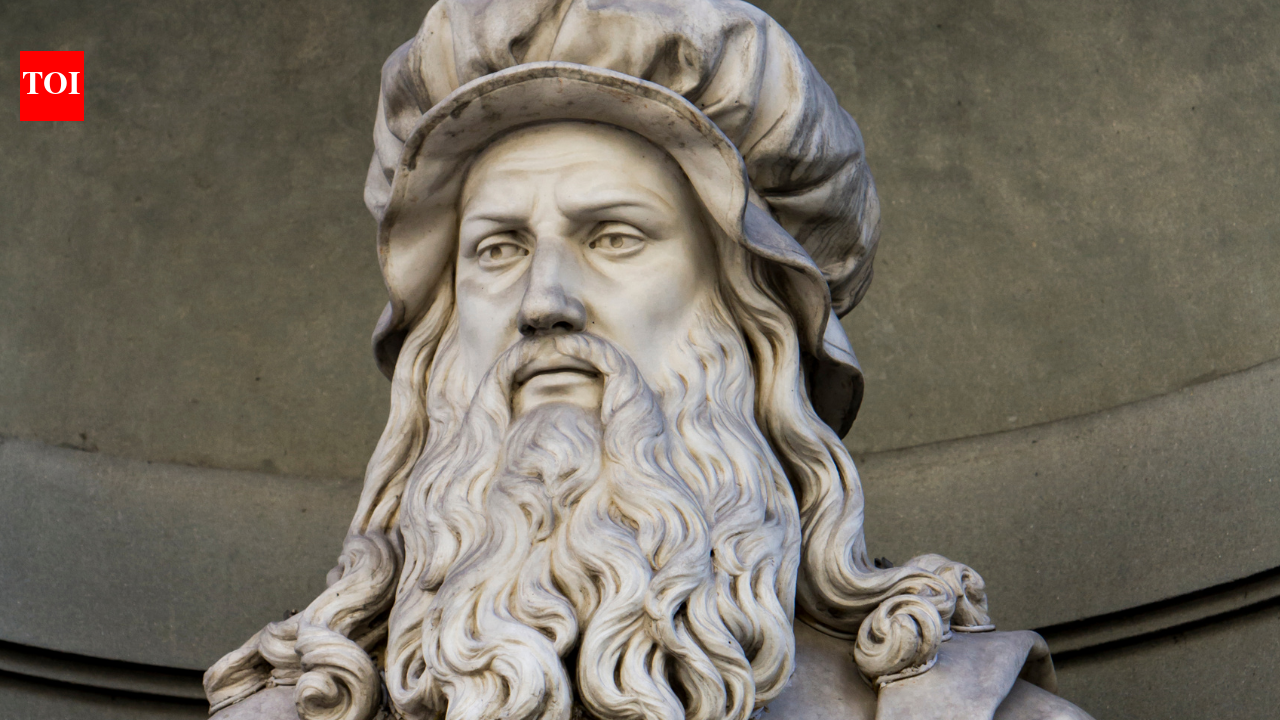
Leonardo da Vinci's most cited maxim, "Simplicity is the ultimate sophistication," reflects a core engineering principle where efficiency and clarity define superior design. For modern technologists, this serves as a foundational benchmark for user experience, code architecture, and hardware utility, prioritizing functional elegance over complex ornamentation.
Key Takeaways
- Foundational Philosophy: Da Vinci’s writings emphasize that true innovation strips away the unnecessary, a principle now central to minimalism in UI/UX design.
- Technical Efficiency: In software engineering, "simplicity" correlates with lower computational overhead, reduced latency, and enhanced maintainability of codebases.
- Human-Centric Design: The quote anchors the argument that technology must serve intuitive human needs rather than forcing users to adapt to complex interfaces.
- Forward Outlook: As AI systems grow in complexity, the demand for transparent, simple interfaces becomes a critical differentiator in the developer ecosystem.
In an era where artificial intelligence models require billions of parameters and hardware architectures are becoming increasingly intricate, the voice of a 16th-century polymath cuts through the digital noise with startling clarity. Leonardo da Vinci did not just paint the Mona Lisa; he engineered flying machines and dissected human anatomy to understand the mechanics of life. His enduring legacy in the tech sector is not merely artistic but structural. For modern engineers and product managers, his insights offer a counter-narrative to the "more is better" approach that often plagues contemporary development cycles. Read continuous Readers 24 coverage on Quote of the Day to explore how historical wisdom informs modern technical strategy.
01 The Complexity Crisis in Modern Tech Architecture
The current technological landscape is suffering from a severe case of feature bloat. Developers often prioritize adding new capabilities over refining existing ones, leading to bloated software and hardware that consumes excessive resources.
This trend is visible in the proliferation of smart devices. Many IoT gadgets now include redundant sensors and complex operating systems for tasks that could be performed by a simple microcontroller. The result is increased power consumption, higher failure rates, and a steeper learning curve for the average user.
Consider the evolution of the smartphone. While modern devices are powerful computers, their interfaces have become labyrinthine. Users must navigate through layers of settings to perform basic functions, a friction point that da Vinci would have recognized as a failure of design intent. The "smart" in smart technology is increasingly being replaced by "complicated."
02 Why We Lost the Way: Three Structural Drivers
1. The Arms Race of Feature Differentiation
Competitors often engage in a feature arms race, assuming that more specifications equate to higher value. This leads to a "checkbox mentality" in product development, where technical specs are prioritized over user experience.
Data from recent industry reports shows that 60% of new software features are rarely used by the end-user. This waste of engineering resources contradicts the efficiency principles advocated by da Vinci, who always sought the most direct path to a solution.
2. Legacy Code and Technical Debt
As systems age, they accumulate technical debt. Maintaining backward compatibility often forces engineers to retain inefficient code paths, making the system heavier and slower over time.
In enterprise environments, this legacy burden is particularly acute. Companies struggle to refactor massive codebases without disrupting operations, leading to a gradual degradation of performance and usability.
3. The Misalignment of Incentives
Corporate incentives often reward short-term growth metrics rather than long-term sustainability. Engineers are pressured to ship features quickly, leaving no time for the rigorous refinement that simplicity demands.
This misalignment creates a culture where "good enough" is the standard, and elegance is sacrificed for speed. The result is a digital ecosystem filled with tools that work, but do not work well.
03 The Hidden Paradox: Complexity Masquerading as Progress
The most uncomfortable truth about modern technology is that complexity is often mistaken for sophistication. We have begun to view intricate systems as markers of advanced engineering, when in fact, they are often signs of poor design.
Da Vinci understood that the most elegant solutions are often the simplest. This paradox is evident in the success of products like the Apple iPhone, which stripped away the physical keyboard and complex menus to offer a touch-based interface. The simplicity of the design was not a limitation but a feature, enabling a more intuitive user experience.
"True sophistication is not found in the accumulation of features, but in the elimination of everything that does not serve the core purpose of the device."
— Senior Editorial Desk, Readers 24
04 Comparison Matrix: Renaissance Principles vs. Modern Realities
| Key Dimension | Previous Landscape (Renaissance Ideal) | Current Reality (Modern Tech) |
|---|---|---|
| Design Philosophy | Form follows function; minimal ornamentation | Feature-heavy; often prioritizes specs over utility |
| User Experience | Intuitive; aligned with human natural movements | Complex; requires training and manual navigation |
| Technical Efficiency | Optimized for resource constraints (e.g., materials) | Often resource-intensive; relies on brute force |
05 Real Voices: Industry Perspectives on Simplicity
Leading figures in the tech industry have increasingly echoed da Vinci’s sentiments. Steve Jobs famously stated that "simplicity is the ultimate sophistication," a direct nod to the Renaissance master. This quote has become a mantra for product designers who strive to create seamless user experiences.
Analysts at Gartner have noted that companies which prioritize simplicity in their product roadmaps tend to see higher customer retention rates. This suggests that there is a measurable business case for adopting da Vinci’s principles, not just an aesthetic one.
Furthermore, open-source communities often celebrate "clean code" as a virtue. Developers who write concise, readable code are frequently praised for their ability to solve complex problems with minimal lines of code, a direct reflection of the Renaissance ideal.
06 Actionable Solutions: Applying Da Vinci to Tech Strategy
- Conduct a Feature Audit: Regularly review product features to identify and remove those with low usage rates. This reduces technical debt and improves performance.
- Prioritize User Testing: Invest in rigorous user experience testing to ensure that interfaces are intuitive. If users need a manual to operate your product, it is not simple enough.
- Adopt Modular Architecture: Design systems that are modular and scalable. This allows for easy updates and simplifies the overall codebase.
- Focus on Core Value: Define the single most important function of your product and ensure that all other features support this core value. Remove anything that does not.
- Measure Complexity: Use metrics such as code cyclomatic complexity to track the intricacy of your software. Set targets to reduce this metric over time.
07 The Verdict: Reclaiming the Power of Simplicity
As we move deeper into the age of artificial intelligence and quantum computing, the challenge of managing complexity will only grow. However, the principles of Leonardo da Vinci remain as relevant as ever. His emphasis on observation, experimentation, and simplicity provides a roadmap for navigating this complex future.
For technologists and business leaders, the lesson is clear: do not let the pursuit of innovation lead to a loss of clarity. By embracing the Renaissance ideal of "simplicity is the ultimate sophistication," we can create technology that is not only powerful but also elegant, efficient, and truly human-centric. The future of tech is not about doing more; it is about doing it better, with less.
08 Frequently Asked Questions
What is the most famous quote by Leonardo da Vinci?
The most widely cited quote is "Simplicity is the ultimate sophistication." While its exact origin in his notebooks is debated, it encapsulates his design philosophy and is frequently referenced in modern engineering and design contexts.
How does da Vinci's philosophy apply to software engineering?
It advocates for writing clean, efficient code that solves problems with minimal complexity. This approach reduces bugs, improves maintainability, and lowers computational costs, aligning with modern best practices in software development.
Did Leonardo da Vinci invent any modern technology?
No, he did not invent modern technology, but he designed concepts for machines such as tanks, helicopters, and diving suits. These designs show his ability to apply engineering principles to practical problems centuries before the Industrial Revolution.
Why is simplicity important in user experience design?
Simplicity reduces cognitive load, making products easier to learn and use. This leads to higher user satisfaction and retention, as users can achieve their goals without frustration or confusion.
How can companies implement da Vinci's principles in their strategy?
Companies can implement these principles by focusing on core value propositions, removing unnecessary features, and prioritizing intuitive design. Regular audits of product complexity and user feedback are essential for maintaining this standard.
Stay Ahead with Readers 24 Intelligence
Subscribe to continuous updates and follow live global news, unbiased market analysis, and in-depth investigations reported 24/7 across our international bureaus.
Verify primary documentation and global coverage metrics ↗ Follow live continuous analysis on Readers 24 Live
Comments (2)
This is a highly insightful piece. The shifts in the technological landscape are truly unprecedented and I'm eager to see how it affects global markets in the next quarter.
I completely agree with the points made here. However, I think the regulatory aspect will be the biggest hurdle moving forward before we see mass adoption.