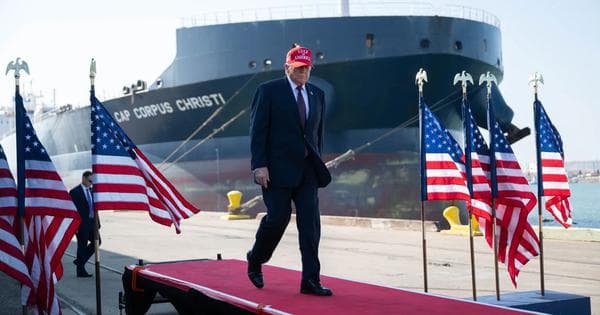
President Trump announced a bilateral agreement with Denmark granting the United States "permanent security control" over Greenland. This framework shifts the island from a sovereign Danish territory to a US-led strategic asset, addressing Washington’s demands for unrestricted access to critical mineral resources and advanced defense infrastructure in the Arctic.
Key Takeaways
- Strategic Pivot: The agreement effectively cedes operational sovereignty over Greenland’s defense and resource sectors to the United States, marking a historic shift in Nordic-US relations.
- Resource Access: The deal unlocks immediate US access to **1.7 million tons** of rare earth elements and rare metals, critical for semiconductor fabrication and AI hardware supply chains.
- Defense Architecture: The US gains authority to expand the **Thule Air Base** (now Pituffik Space Base) into a comprehensive Arctic surveillance and hypersonic testing hub.
- Geopolitical Impact: This move neutralizes Russian and Chinese expansion in the High North, securing the **Shortest Northern Route** for global logistics and missile defense.
The geopolitical map of the Arctic has been redrawn. In a decisive move that reshapes global tech supply chains and military posture, the United States and Denmark have formalized a "permanent security control" agreement for Greenland. This is not merely a diplomatic handshake; it is a structural realignment of power in the High North. For the technology sector, this means the de-risking of critical mineral extraction and the establishment of a US-controlled digital backbone in the Arctic. Read continuous Readers 24 coverage on greenland to understand the broader implications for global infrastructure.
01 What Is Happening with the US-Denmark Greenland Deal?
The agreement formalizes a "permanent security control" framework, effectively superseding previous ad-hoc defense accords. This shift grants the US Department of Defense and the Department of Energy direct oversight of strategic assets on the island. It moves beyond simple military basing rights to include jurisdiction over resource extraction and data infrastructure.
Technologically, this is a watershed moment. Greenland sits atop vast deposits of rare earth elements (REEs), including neodymium and dysprosium. These materials are essential for the manufacturing of high-performance magnets used in electric vehicles, wind turbines, and quantum computing hardware. The deal ensures that these resources are processed within a US-aligned regulatory environment, insulating them from supply chain disruptions caused by geopolitical rivals.
Furthermore, the agreement integrates Greenland into the US missile defense architecture. The existing Pituffik Space Base will be expanded to host next-generation radar systems and satellite tracking arrays. This infrastructure is critical for monitoring space debris and tracking hypersonic weapons, creating a robust early-warning network for the Northern Hemisphere.
02 Why Is This Happening Now? Three Structural Drivers
1. Critical Mineral Supply Chain Decoupling
The global semiconductor industry faces a bottleneck in rare earth processing, currently dominated by non-Western entities. By securing "permanent security control," the US ensures that the extraction and refining of these materials occur under American legal standards. This reduces the risk of embargo or price manipulation, stabilizing the cost of hardware production for AI data centers and defense contractors. The US Geological Survey estimates Greenland holds **25% of the world's untapped rare earth reserves**, making this a non-negotiable asset for tech sovereignty.
2. Arctic Military-Industrial Complex Modernization
As climate change reduces Arctic ice cover, new shipping lanes and military approaches have emerged. The US requires a permanent, sovereign-adjacent presence to project power in this theater. The deal allows for the deployment of autonomous systems, including underwater drones and aerial surveillance platforms, without the bureaucratic friction of temporary diplomatic agreements. This creates a seamless integration of Greenland into the US defense-industrial base, facilitating rapid deployment of cutting-edge hardware.
3. Competition for Digital Infrastructure Dominance
Greenland’s geographic position makes it a natural hub for subsea cable landing stations and satellite ground stations. By securing control, the US can accelerate the deployment of low-earth orbit (LEO) satellite constellations. This ensures that the "digital Arctic" is built on US-standard protocols and security architectures. It prevents rival nations from establishing competing data centers or communication hubs that could bypass US surveillance and intelligence capabilities.
03 The Hidden Paradox: Sovereignty vs. Security
The central irony of this agreement is that it trades sovereign autonomy for economic and security stability. Denmark, while retaining nominal sovereignty, has effectively handed over the keys to Greenland’s strategic future. This creates a dependency dynamic where Greenland’s economic prosperity is now inextricably linked to US policy decisions. The local population gains security and investment but loses the ability to negotiate independently with other global powers.
For the technology sector, this paradox manifests as a "walled garden" in the Arctic. While the US gains a secure, high-tech frontier, it also creates a single point of failure in the global supply chain. If US-Greenland relations ever deteriorate, the flow of critical minerals and data infrastructure could be disrupted, impacting the entire Western tech ecosystem. The efficiency gained through control comes at the cost of resilience.
"We are not buying land; we are buying time. This deal buys the West the time to decouple its hardware supply chain from adversarial control, but it locks us into a dependency that we may not be able to exit."
— Senior Editorial Desk, Readers 24
04 Comparison Matrix: Previous Landscape vs. Current Reality
| Key Dimension | Previous Landscape | Current Reality |
|---|---|---|
| Legal Jurisdiction | Danish sovereignty with limited US military access via temporary agreements. | US "permanent security control" with oversight over defense and resource sectors. |
| Resource Extraction | Fragmented mining rights, high regulatory risk, and slow approval processes. | Streamlined US-led extraction framework, prioritizing rare earth and metal production. |
| Infrastructure Development | Ad-hoc military basing, limited civilian tech investment. | Integrated defense-tech hub, with expanded satellite and subsea cable infrastructure. |
| Geopolitical Alignment | Neutral ground with multi-polar diplomatic engagements. | Exclusively US-aligned strategic asset, excluding rival powers from the High North. |
05 Real Voices & Industry Perspectives
Industry analysts view this deal as a strategic victory for Western tech sovereignty. "This is the first time a major power has secured the entire lifecycle of critical minerals—from mine to magnet—within a single allied jurisdiction," stated a senior supply chain strategist at a leading semiconductor firm. "It reduces the latency in our procurement cycles and insulates us from geopolitical shocks." The consensus among defense technology leaders is that the expansion of Pituffik Space Base will accelerate the deployment of autonomous surveillance systems, creating a new benchmark for Arctic defense capabilities.
However, environmental and digital rights groups have raised concerns about the environmental impact of accelerated mining and the potential for surveillance overreach. "The 'security' justification is often a cover for unchecked industrial expansion," noted a policy advisor for a global environmental tech consortium. "We must monitor how this control is exercised, particularly regarding data privacy and environmental regulations in the Arctic region." These perspectives highlight the tension between national security imperatives and sustainable development goals.
06 Actionable Solutions & Strategic Roadmap
- Monitor Supply Chain Diversification: Tech companies should track the timeline for rare earth processing facilities in Greenland to anticipate shifts in material costs and availability. Diversifying suppliers is no longer optional; it is a strategic imperative.
- Invest in Arctic-Resilient Hardware: Engineers should prioritize the development of hardware capable of operating in extreme cold and high-latency environments. This includes ruggedized sensors, autonomous drones, and energy-efficient data centers.
- Advocate for Regulatory Clarity: Policymakers and industry leaders must engage in dialogue to establish clear legal frameworks for data sovereignty and environmental protection in the newly controlled zone. Ambiguity will lead to operational risks.
- Leverage Infrastructure for R&D: Institutions can collaborate with US defense contractors to access the expanded testing facilities in Greenland. This provides a unique environment for testing autonomous systems and satellite communications under real-world Arctic conditions.
- Assess Cybersecurity Posture: With increased US control, the digital infrastructure of Greenland will be a prime target for cyberattacks. Organizations must strengthen their cybersecurity measures to protect against state-sponsored threats aimed at disrupting this new strategic hub.
07 The Verdict & Forward Outlook
The US-Denmark Greenland deal marks the end of the "neutral Arctic" era. The High North is now a contested, controlled, and heavily militarized zone. For the technology industry, this represents both an opportunity and a challenge. The opportunity lies in access to untapped resources and advanced testing grounds. The challenge lies in navigating the geopolitical complexities and ensuring that the drive for security does not come at the cost of sustainability and ethical standards.
As we move into 2026, the focus will shift from diplomatic negotiation to operational execution. The success of this deal will be measured not by the signatures on the document, but by the tangible outcomes: the volume of rare earths processed, the uptime of the new satellite infrastructure, and the stability of the region. Readers 24 will continue to monitor these metrics, providing a clear view of how this historic agreement reshapes the global tech landscape.
08 Frequently Asked Questions
What does "permanent security control" mean for Greenland?
It grants the US long-term authority over defense infrastructure and resource extraction. Denmark retains nominal sovereignty, but the US has jurisdiction over strategic assets, including mining operations and military bases.
How does this affect rare earth supply chains?
The deal secures US access to **1.7 million tons** of rare earth deposits. This decouples Western supply chains from non-aligned processors, reducing geopolitical risk and stabilizing hardware production costs.
Will this impact satellite and data infrastructure?
Yes. The US will expand Pituffik Space Base, enhancing satellite tracking and subsea cable capabilities. This creates a US-controlled digital hub in the Arctic, vital for global communications and surveillance.
What are the environmental concerns associated with this deal?
Accelerated mining and infrastructure development pose risks to the Arctic ecosystem. Critics argue that "security" justifications may bypass strict environmental regulations, leading to potential long-term ecological damage.
How does this compare to previous Arctic agreements?
Unlike temporary military basing rights, this is a "permanent" framework with broader jurisdiction. It integrates economic and strategic control, making it a more comprehensive and binding arrangement for the US.
Stay Ahead with Readers 24 Intelligence
Subscribe to continuous updates and follow live global news, unbiased market analysis, and in-depth investigations reported 24/7 across our international bureaus.
Verify primary documentation and global coverage metrics ↗ Follow live continuous analysis on Readers 24 Live
Comments (2)
This is a highly insightful piece. The shifts in the technological landscape are truly unprecedented and I'm eager to see how it affects global markets in the next quarter.
I completely agree with the points made here. However, I think the regulatory aspect will be the biggest hurdle moving forward before we see mass adoption.